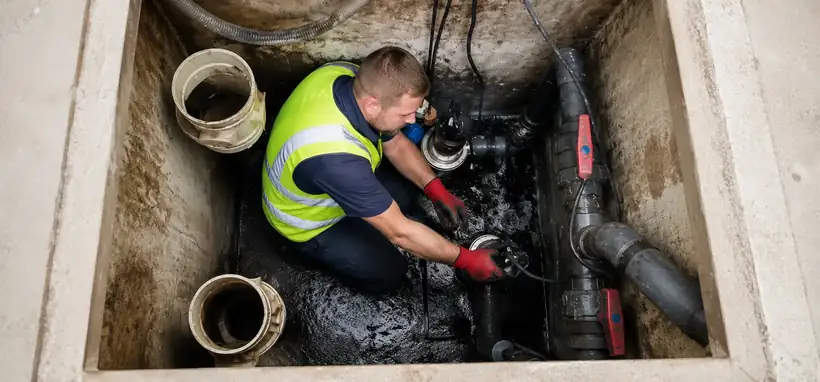
Why grease is the number one commercial drain problem
A commercial kitchen sends fats and oils into the drainage all day. They go down warm and liquid, then cool and harden further along the pipe, coating the wall and building toward a blockage that usually surfaces during a busy service. A grease trap exists to catch most of that grease before it reaches the drain, but only if it is serviced before it overfills.
Left too long, a full trap stops separating grease, which then passes into the drain lines and does exactly what it does in any pipe. That is how a missed service becomes a blocked kitchen drain at the worst possible moment.
What a proper grease service covers
Emptying and cleaning the trap before it reaches the quarter-full point.
Jetting the drain lines to clear any grease that has passed through.
Checking the trap is working and correctly sized for the kitchen.
Keeping the service records that compliance requires.
Setting an interval matched to your real output, not a guess.
Scheduled, not reactive
For a busy restaurant or hotel kitchen, scheduled servicing is far cheaper than the emergency it prevents. We set an interval from how fast your trap fills, jet the lines periodically, and keep the documentation, so a blockage during service stays off the calendar.