
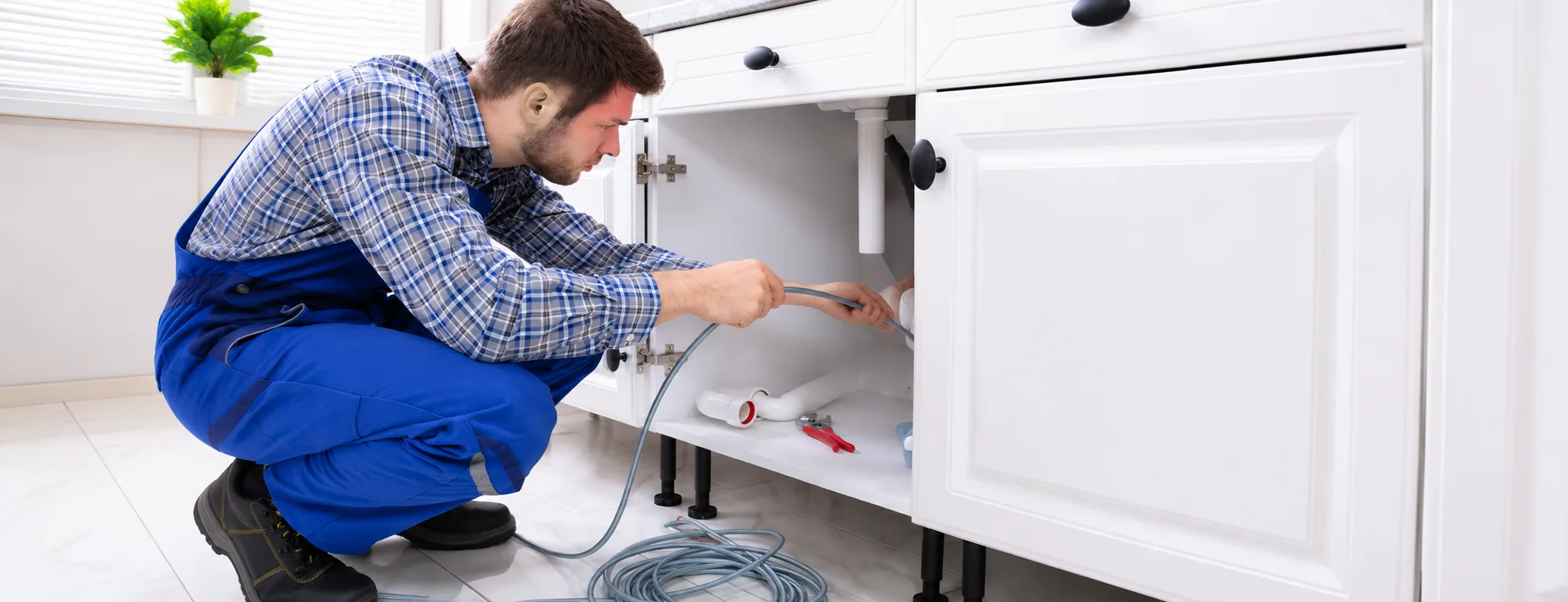
Pressure reducing valve services in Dubai
Too much pressure is as much a problem as too little. A PRV is what keeps it in the safe range.
Quick answer
What does a pressure reducing valve do?
A pressure reducing valve (PRV) lowers the incoming mains water pressure to a safe, controlled level before it reaches your plumbing. Excessive pressure stresses pipes, fittings and appliances, causes leaks and water hammer, and wastes water. A PRV protects the whole system by holding the pressure in the range fixtures are designed for.
Too much pressure is a real problem
Low water pressure gets all the complaints, but excessive pressure is quietly more damaging. Water pressure that is too high stresses everything it touches: it strains pipe joints and fittings, shortens the life of appliances and their inlet valves, makes water hammer worse, causes taps to leak and drip, and wastes water through every outlet. Because high pressure feels like strong flow, it is often mistaken for a good thing, right up until it causes a leak or a failure. A pressure reducing valve is the device that brings incoming pressure down to a safe, controlled level and holds it there.
What PRV services cover
- Fitting a PRV where incoming pressure is too high and no valve is protecting the system.
- Adjusting an existing PRV to the correct pressure, since a wrongly set valve either fails to protect or over-restricts.
- Replacing a failed PRV, which is a common and often-missed cause of pressure problems.
- Diagnosing whether a pressure problem is a PRV issue at all, rather than something else.
A failed PRV is worth highlighting because it fails in both directions. A PRV that fails open lets full mains pressure through, bringing back all the high-pressure problems it was fitted to prevent. A PRV that fails closed or clogged over-restricts, causing low pressure that is easily mistaken for a supply problem or blamed on a pump. So a PRV is a frequent hidden cause of both high and low pressure symptoms, which is why checking it is part of diagnosing either.
Where the PRV fits in the pressure picture
Pressure problems are best understood together. A booster pump raises pressure that is too low; a pressure reducing valve lowers pressure that is too high; and water hammer is often driven by excessive pressure that a PRV would control. A failing PRV can masquerade as either a low-pressure or a high-pressure fault. This is why we look at the whole pressure picture rather than one symptom, since fitting a pump when a stuck-closed PRV is the real cause, or ignoring a failed-open PRV that is stressing the system, both miss the actual problem.
Frequently asked questions
Why is high water pressure a problem?
Because it stresses everything it touches: it strains pipe joints and fittings, shortens the life of appliances and their inlet valves, worsens water hammer, causes taps to leak and drip, and wastes water. High pressure feels like strong flow, so it is often mistaken for a good thing until it causes a leak or failure. A pressure reducing valve brings incoming pressure down to a safe, controlled level and holds it there, protecting the whole plumbing system from the damage excessive pressure causes over time.
How do I know if my PRV has failed?
A failed PRV shows in one of two ways. If it fails open, full mains pressure comes through and the high-pressure problems return: banging pipes, dripping taps, leaks. If it fails closed or clogs, it over-restricts and you get low pressure that is easily mistaken for a supply issue or blamed on a pump. Because a failed PRV can cause either high or low pressure symptoms, checking it is part of diagnosing either, and it is a common hidden cause of pressure problems people chase elsewhere.
Can a pressure reducing valve cause low water pressure?
Yes, and it is a commonly missed cause. If a PRV fails closed, clogs, or is set too low, it over-restricts the flow and produces low pressure that is easily blamed on the supply or on a pump. This is why we check the PRV when diagnosing low pressure, since replacing a working pump or chasing the supply will not fix a PRV that is throttling the system. A PRV is a frequent hidden cause of both high and low pressure symptoms.
Do I need a pressure reducing valve fitted?
You need one if your incoming mains pressure is too high, which stresses the plumbing and causes leaks, water hammer and wasted water. Fitting a PRV brings the pressure down to a safe level and protects the system. Whether your pressure is genuinely too high, rather than the symptoms having another cause, is worth confirming first, which we do by assessing the pressure and the symptoms, so a PRV is fitted where it is actually needed rather than as a guess.
Do you offer pressure reducing valve services near me?
For a service like this, near me really means how quickly we can get to you. We provide pressure reducing valve services across Dubai, working from our base in Al Quoz Industrial Third, so a near me search is answered less by a branch on your street and more by how quickly we can reach you. That depends on where you are in the city, the time of day and access, so rather than claim to be the nearest, we ask where you are and give you a realistic time to attend. Tell us your location and what you need, and we will be straight about when we can be there.
Related pages
Contact
Tell us about the pressure
Banging pipes, repeated leaks, or a valve you think has failed. That points to whether you need a PRV fitted, adjusted or replaced.
Phone
+971 56 864 8994
Email
info@jetdrainpro.com
Pressure too high, or a failed PRV?
Tell us the symptoms: banging pipes, leaks, or a PRV that has failed. We fit, adjust or replace as needed.