
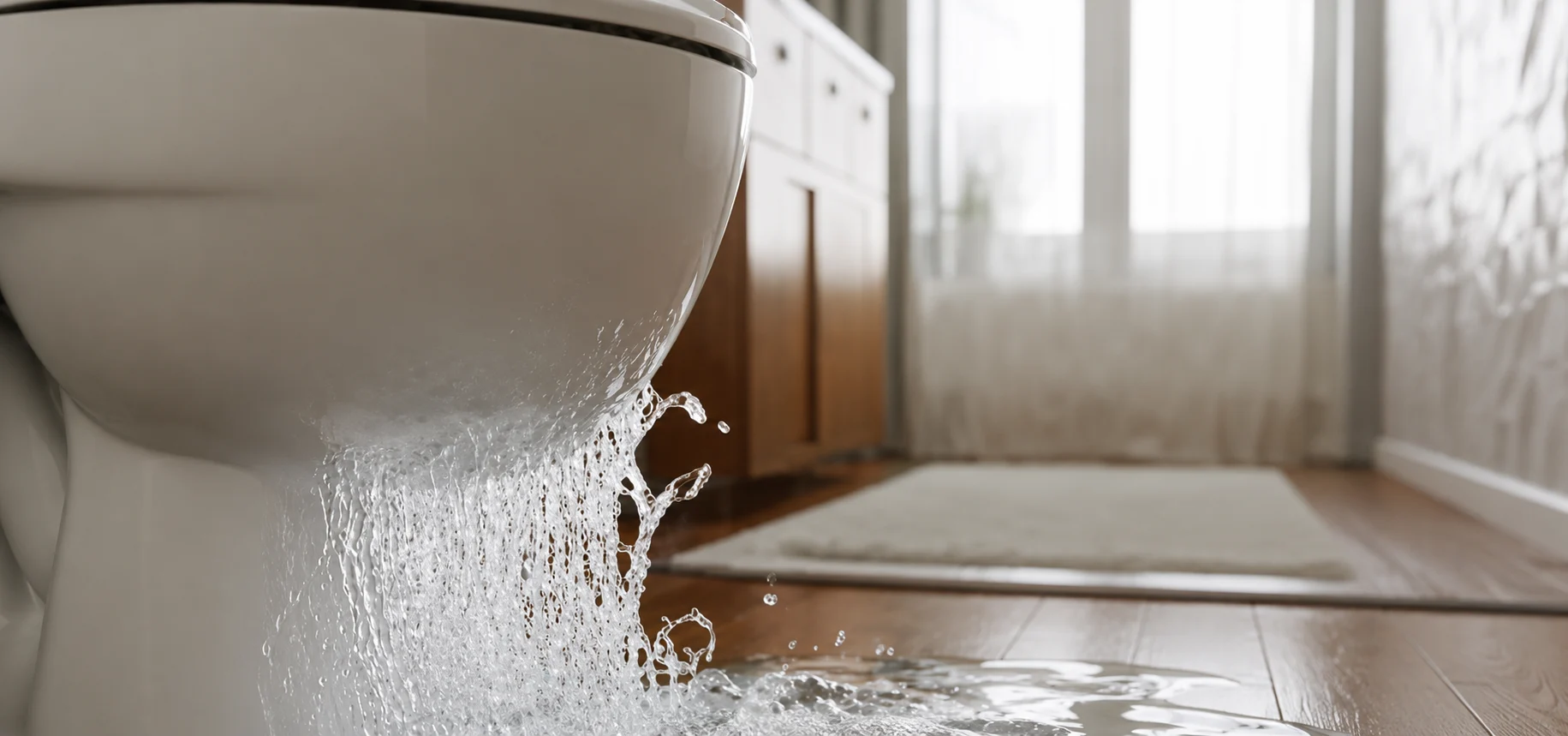
Water leak detection in Dubai
A leak you cannot see is still doing damage. The job is finding exactly where, before anyone breaks anything.
Quick answer
How do you find a hidden water leak?
A hidden water leak is found by locating it before opening anything up: tracing the sound of escaping water, checking moisture and temperature patterns, and isolating sections of pipework to narrow down the source. The aim is to pinpoint the leak precisely so the repair opens one spot, not a whole wall or floor.
The signs of a leak you cannot see
Hidden leaks announce themselves indirectly. A water bill that climbs for no reason is often the first sign. A damp patch on a wall, ceiling or floor that will not dry, a section of floor that is unexpectedly warm where a hot line runs beneath it, a musty smell, or the faint sound of running water when every tap is off, all point to water escaping somewhere out of sight. In Dubai, where a great deal of pipework runs within walls, under tiled floors and below ground, these hidden leaks are common and can do considerable damage before they are found.
The mistake is to start breaking into walls and floors hunting for the leak. That is expensive, disruptive, and often wrong the first few times. The whole point of leak detection is to locate the leak precisely before anything is opened, so the repair is a single targeted opening rather than exploratory demolition.
Locating before opening
Finding a hidden leak is a process of narrowing down. Isolating sections of the plumbing shows which run is losing water. Following the trail of moisture and, where a hot line is involved, temperature difference indicates where the water is travelling. Listening for the sound of water escaping under pressure helps pinpoint the location along a run. Together these methods locate the leak closely enough that the repair opens one spot.
This matters most under hard surfaces. A leak under a tiled floor or within a rendered wall is costly to reach, and the cost is mostly in breaking and reinstating the surface, not the pipe repair itself. Locating the leak precisely means that surface is opened once, in the right place, which is the same logic we apply to locating a drainage fault with a camera before excavating.
Leak detection and drainage often overlap
Not every damp patch is a supply leak. Water appearing in a wall or floor can come from a leaking drainage pipe rather than a pressurised supply line, and telling the two apart is part of the job. A supply leak is under constant pressure and leaks continuously; a drainage leak often shows only when the fixture above is used. Because we work on both sides, supply and drainage, we can identify which one you actually have rather than assuming, which is a common way a leak is chased in the wrong place for weeks.
Frequently asked questions
How do I know if I have a hidden water leak?
Common signs are a water bill that rises with no change in use, a damp patch that will not dry, an unexpectedly warm area of floor where a hot pipe runs beneath, a musty smell, or the sound of running water when all taps are off. In Dubai, with so much pipework inside walls and under floors, hidden leaks are common. Any of these signs is worth investigating before the water causes structural or damp damage.
Can you find a leak without breaking the walls?
That is the entire purpose of leak detection. Rather than breaking into walls and floors to hunt for a leak, we locate it first, by isolating sections of pipework, following moisture and temperature patterns, and listening for escaping water, so the leak is pinpointed before anything is opened. The repair then opens a single targeted spot instead of demolishing a wall or floor exploratorily, which is where most of the cost and disruption otherwise goes.
Is my damp patch a supply leak or a drainage leak?
Either is possible, and they need different responses, so telling them apart matters. A pressurised supply leak leaks continuously because the pipe is always under pressure. A drainage leak usually shows only when the fixture draining into that pipe is used. Because we work on both supply and drainage, we can identify which one you actually have rather than chasing the wrong system, which is a common reason a leak goes unfound for a long time.
Why is my water bill suddenly high?
A sudden rise in a water bill with no change in your usage is one of the most reliable signs of a hidden leak, water escaping continuously from a pressurised line somewhere out of sight. It is worth acting on promptly, because the leak is both costing money on every bill and potentially causing damp or structural damage where the water is collecting. Leak detection locates the source so it can be repaired before both costs grow.
Is there a water leak detection service near me in Dubai?
In practical terms, near me means we can reach you. We provide water leak detection across Dubai, working from our base in Al Quoz Industrial Third, so a near me search is answered less by a branch on your street and more by how quickly we can reach you. That depends on where you are in the city, the time of day and access, so rather than claim to be the nearest, we ask where you are and give you a realistic time to attend. Tell us your location and what you need, and we will be straight about when we can be there.
Related pages
Contact
Tell us the signs
A damp wall, a warm floor, a bill that has jumped, or water sounds with all taps off. Each points somewhere slightly different.
Phone
+971 56 864 8994
Email
info@jetdrainpro.com
Suspect a hidden leak?
A rising water bill, a damp patch, or the sound of running water with everything off. Tell us the signs and we will find it.