
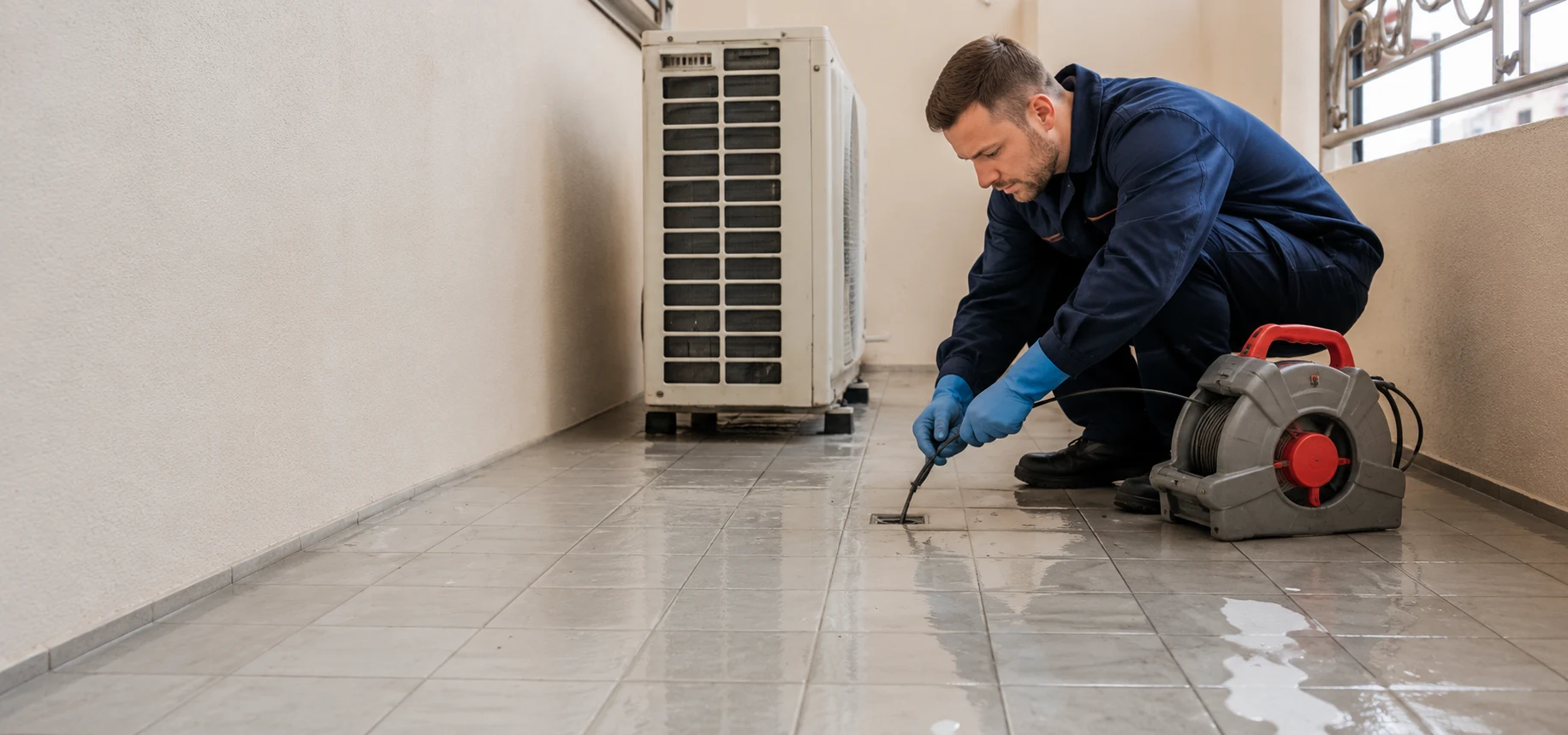
Drainage for facility management
You answer to an owner. You need the work done, and you need to be able to prove it was.
Quick answer
What do facility managers need from a drainage contractor?
A facility manager needs reliable scheduling across a portfolio, documented visits they can show an owner, and dependable response when something fails. The drainage work itself is standard; what a facility manager is really buying is a contractor who turns up when planned, keeps records, and does not create problems the manager has to explain upward.
The work is standard. The relationship is the product.
A facility management company does not need to be told what jetting or a survey is. It needs a drainage contractor it can rely on across a portfolio of buildings without having to manage them closely. The technical work is the same work we do everywhere. What a facility manager is actually buying is the operational reliability around it: scheduled visits that happen when scheduled, response when something fails, and a contractor who does not become one more thing to chase.
This matters because a facility manager's own credibility depends on it. When a drainage contractor misses a planned visit or leaves a job half-finished, it is the facility manager who explains that to the owner, not the contractor. So the facility manager needs a contractor who makes them look reliable, which means turning up, finishing, and reporting, consistently, across every building in the portfolio.
Documentation is not paperwork, it is the point
A facility manager reports to an owner, a body corporate or an asset manager, and that relationship runs on evidence. Every drainage visit needs to produce a record: what was done, what was found, what was recommended, and what remains outstanding. That record is what lets the facility manager demonstrate the buildings are being maintained, support a budget request, or show that a problem was flagged before it became a failure. A contractor who does the work but leaves no usable record has done half the job, because the record is what the facility manager takes upward.
So documentation is built into how we work with facility managers, not added on request. Each visit produces something the manager can file and forward, and a periodic survey produces evidence of condition across the portfolio that supports planning and budgeting rather than just recording a single job.
Planned and reactive, across the portfolio
Facility management drainage usually has two parts. Planned maintenance keeps the shared systems across the portfolio ahead of failure, on intervals set by each building's use and condition rather than a blanket schedule. And reactive cover handles the failures that still occur, with dependable response, because in a managed building a slow response is the facility manager's problem before it is anyone else's. The two together let a facility manager treat drainage as a managed, predictable line rather than a series of surprises across a portfolio of buildings.
Frequently asked questions
Do you work with facility management companies across multiple buildings?
Yes. We work with facility management companies across portfolios of buildings, providing both planned maintenance and reactive cover. The arrangement is built around how the facility manager operates and reports, with consistent scheduling and documentation across the portfolio, so drainage becomes a predictable managed line rather than a series of separate callouts at separate buildings.
What documentation do you provide for managed buildings?
Each visit produces a record of what was done, what was found, what was recommended and what remains outstanding, which is what a facility manager needs to report upward to an owner or body corporate. Periodic surveys produce evidence of condition across the portfolio to support planning and budgeting. The documentation is built into how we work, because for a facility manager the record is often as valuable as the work itself.
Can you provide reliable response for reactive drainage issues?
Yes. Alongside planned maintenance we provide reactive cover for the failures that still occur, with dependable response, because in a managed building a slow response reflects on the facility manager first. How quickly we attend depends on the location and the nature of the issue, and for portfolio clients we agree response expectations as part of the arrangement rather than leaving them undefined.
How is working with a facility manager different from a direct client?
A facility manager is accountable to someone else, usually an owner or body corporate, so the work has to be reliable and documented, not just done. The technical drainage work is the same, but the priorities shift toward consistent scheduling, dependable response, and records the manager can forward. In practice we are helping the facility manager look reliable to the people they report to, which is why documentation and turning up when planned matter so much.
Is there a facility management drain services service near me in Dubai?
In practical terms, near me means we can reach you. We provide facility management drain services across Dubai, working from our base in Al Quoz Industrial Third, so a near me search is answered less by a branch on your street and more by how quickly we can reach you. That depends on where you are in the city, the time of day and access, so rather than claim to be the nearest, we ask where you are and give you a realistic time to attend. Tell us your location and what you need, and we will be straight about when we can be there.
Related pages
Contact
Tell us about your portfolio
The buildings you manage, their use, and whether you need planned maintenance, reactive cover, or both. We will scope it around your reporting.
Phone
+971 56 864 8994
Email
info@jetdrainpro.com
Talk to us about your portfolio
Tell us the type and number of buildings you manage. We will propose a maintenance and response arrangement built around how you report.