
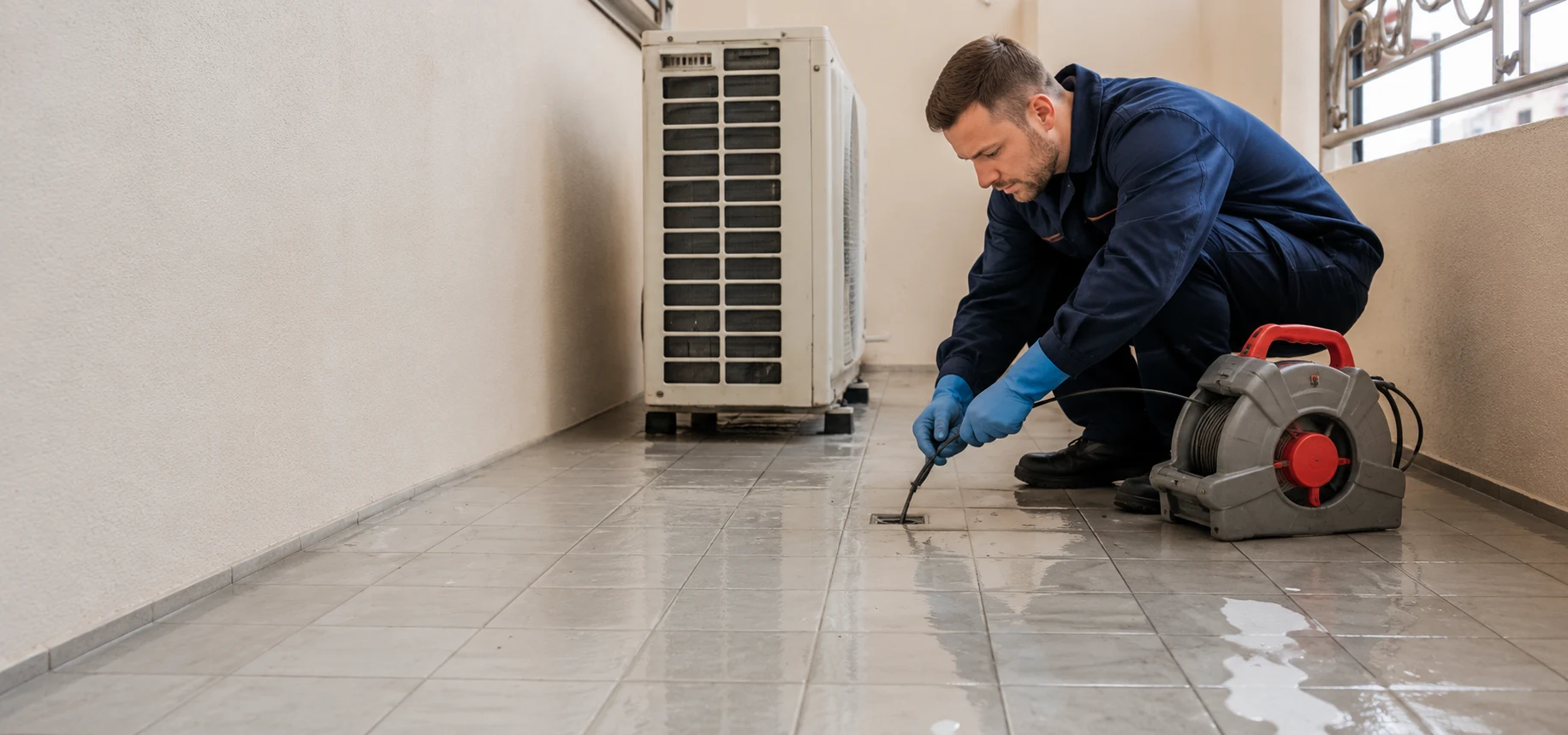
Commercial drain maintenance in Dubai
The alternative to waiting for the line to fail during a Friday service.
Quick answer
What is commercial drain maintenance?
Commercial drain maintenance is planned, scheduled servicing of a building's drainage before it fails, rather than reactive clearing after it does. It combines periodic jetting, chamber and trap cleaning, and CCTV survey, on an interval set by what the system's condition requires. The aim is to remove emergencies from the calendar.
Why reactive drainage is the expensive kind
A commercial kitchen that clears a blocked line only when it blocks is not saving money by waiting. It is choosing the most expensive possible moment to deal with the problem: mid-service, out of hours, at an emergency rate, with covers turned away and, in the worst case, a closure while the mess is dealt with. The blockage was building for weeks. The cost lands in one evening.
Planned maintenance moves the same work to a quiet morning, at a booked rate, before anything fails. It does not eliminate every drainage event, but it removes the class of event that closes a kitchen, which is the class that costs real money. For most commercial premises the maintenance schedule is cheaper across a year than the emergencies it prevents.
What a maintenance schedule includes
- Planned jetting of the lines that foul, at an interval set by how fast they foul.
- Servicing of chambers, gully traps and interceptors, so the line is not being cleaned into a full chamber.
- Grease trap servicing for food premises, on the schedule the trap's fill rate dictates, with records built for inspection. See grease trap regulations.
- Periodic CCTV survey, so a structural fault is found while it is small and the schedule stays matched to the system's actual condition.
- A record of each visit, which for a managed building is also the evidence an owner or an auditor wants to see.
The interval comes from the building, not a template
The single thing that separates useful maintenance from a contract that bills for visits nobody needs is where the interval comes from. A generic quarterly schedule is wrong for almost every building: too frequent for a low-load office, not nearly frequent enough for a fryer-heavy kitchen with a long horizontal run.
We survey the system once, at the start, and set the first interval from what that survey and the first service find. Then we adjust it as the record builds: a line that comes back clean at three months moves to four; a trap that is full at six weeks moves to four. The schedule tracks the building. That is the difference between maintenance and a subscription.
Who this is for
Restaurants and hotels, where grease loading and volume make drainage failure a matter of when rather than if, and where a failure closes covers. Retail and offices, where the cost is lower but a backup into a public area is its own kind of expensive. Industrial premises, where the discharge is heavier and the compliance requirements are stricter. And the facility and property managers who answer to an owner when any of the above goes wrong, and who need a record rather than a technician's word.
Frequently asked questions
How much does commercial drain maintenance cost?
It depends on the size and use of the building, the number of lines, chambers and traps, and the interval the system needs, which is why we survey before quoting. The useful comparison is not the contract price on its own but the contract price against a year of emergency callouts, closed covers and out-of-hours rates. For most commercial food premises the planned schedule is the cheaper of the two.
How often should a commercial kitchen's drains be maintained?
The interval should be set by the kitchen's grease loading and the length and fall of its lines, established from an initial survey and the first few services, not from a generic figure. A busy frying kitchen may need attention every few weeks; a light-use premises far less often. We set a conservative first interval and adjust it as the service record shows what the system actually needs.
What is the difference between maintenance and just calling when it blocks?
Calling when it blocks means dealing with drainage at the worst moment, mid-service and out of hours, at an emergency rate, after the blockage has already caused disruption. Maintenance moves the same work to a planned, quiet, booked visit before anything fails, and catches structural faults while they are small. Across a year it is usually cheaper, and it removes the failures that actually close a business.
Do you provide maintenance records for audits and owners?
Yes. Each visit produces a record of what was done, what was found, and what was recommended, which is exactly what a facility manager, an owner or an auditor wants to see. For food premises the grease trap servicing record is also built to satisfy an inspection. The paperwork is part of the service, not an extra.
Is there a commercial drain maintenance service near me in Dubai?
In practical terms, near me means we can reach you. We provide commercial drain maintenance across Dubai, working from our base in Al Quoz Industrial Third, so a near me search is answered less by a branch on your street and more by how quickly we can reach you. That depends on where you are in the city, the time of day and access, so rather than claim to be the nearest, we ask where you are and give you a realistic time to attend. Tell us your location and what you need, and we will be straight about when we can be there.
Related pages
Contact
Ask about a maintenance contract
Restaurant, hotel, retail or industrial. Tell us the premises and whether you have had drainage failures, and we will scope a schedule.
Phone
+971 56 864 8994
Email
info@jetdrainpro.com
Set up a maintenance schedule
Tell us the building and its use. We will survey it once and propose an interval built on what we find, not on a template.