
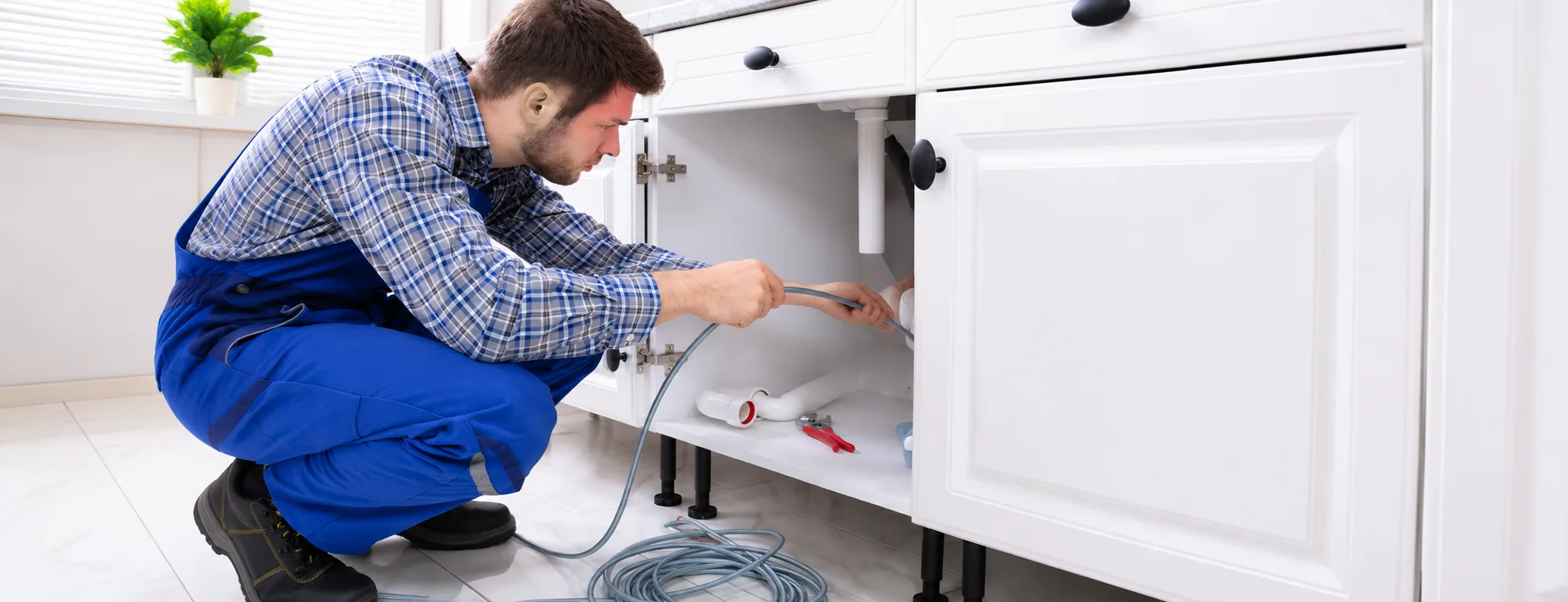
Dishwasher installation in Dubai
Three connections, one of which decides whether it drains or floods your kitchen floor.
Quick answer
What does dishwasher installation involve?
Dishwasher installation means making three connections correctly: the water supply that fills it, the waste connection that drains it, and the power. The drainage connection is the one most often done wrong, because a waste hose fitted without the correct rise or air gap lets dirty water siphon back or leak, which is a plumbing detail rather than an appliance one.
The plumbing is the part that goes wrong
Sliding a dishwasher into a gap is the easy part. The plumbing is where installations succeed or fail, and of the three connections involved, water supply, waste and power, the waste connection is the one most often got wrong. A dishwasher drains dirty water through a hose that connects to the kitchen waste, and that connection has to be made so the water drains away and cannot flow back. Done without the correct rise in the hose or a proper air gap, the appliance can siphon dirty water back into itself, drain poorly, or leak under the cabinet where the leak is not noticed until it has done damage.
This is why dishwasher installation is a plumbing job as much as an appliance one. Getting the water supply connected is straightforward; getting the waste connected correctly, so the machine drains reliably and does not leak or siphon, is the detail that a plumber gets right and a rushed install gets wrong.
What a correct installation gets right
- A secure, leak-free water supply connection with an accessible isolating valve, so the supply can be shut off without drama.
- A waste connection made with the correct hose rise or air gap, so dirty water cannot siphon back into the machine.
- A waste connection to the kitchen drainage that does not compromise the sink's own drainage or create a shared blockage point.
- A check that the appliance fills, drains and does not leak, before it is pushed back and the cabinet closed on it.
When a dishwasher will not drain
A dishwasher that will not drain, or leaves dirty water in the bottom, often has a drainage connection problem rather than an appliance fault, particularly if it started after installation. The waste hose may lack the rise it needs, the connection to the kitchen waste may be partly blocked, or the appliance may be sharing a waste with a kitchen sink that is itself fouled with grease. Because the appliance and the plumbing meet at exactly this point, a draining problem is worth looking at as a plumbing question, not only an appliance one, which is where treating it as connected to the kitchen's wider drainage helps.
Frequently asked questions
Why won't my dishwasher drain properly?
Often because of the waste connection rather than the appliance itself, especially if the problem began after installation. The drain hose may lack the rise it needs to stop water sitting in it, the connection to the kitchen waste may be partly blocked, or the dishwasher may share a waste with a kitchen sink that is fouled with grease. Because the appliance and the plumbing meet at the drain connection, a draining problem is worth checking as a plumbing question, not just an appliance fault.
Can any dishwasher connect to my existing plumbing?
In most kitchens, yes, provided the water supply and waste connections are made correctly. The key is the waste connection: it needs the correct hose rise or an air gap so dirty water cannot siphon back, and it must join the kitchen drainage without creating a blockage point or compromising the sink's own drainage. Where the existing connections are set up for it, installation is straightforward; where they are not, a little plumbing work makes them suitable.
Is dishwasher installation a plumbing job?
Largely, yes. Positioning the appliance is simple, but connecting it, the water supply, and especially the waste drainage, is plumbing, and the waste connection is the part most often done wrong. A correct installation ensures the machine fills, drains reliably and does not leak or siphon dirty water back, which comes down to plumbing details like hose rise and air gaps rather than the appliance itself. That is why it is worth having done by someone who treats the connections properly.
My new dishwasher leaks under the cabinet. Why?
A leak under the cabinet after installation is usually a connection problem: a water supply joint not properly sealed, or more commonly a waste connection that is loose, incorrectly fitted, or allowing water back. Because it leaks out of sight behind and under the machine, it can go unnoticed until it has caused damage to the cabinet or floor. It is worth addressing promptly as a plumbing fault, checking and remaking the connections correctly rather than leaving it.
Where can I find dishwasher installation near me?
The honest version of near me is about response time, not distance on a map. We provide dishwasher installation across Dubai, working from our base in Al Quoz Industrial Third, so a near me search is answered less by a branch on your street and more by how quickly we can reach you. That depends on where you are in the city, the time of day and access, so rather than claim to be the nearest, we ask where you are and give you a realistic time to attend. Tell us your location and what you need, and we will be straight about when we can be there.
Related pages
Contact
Tell us about the install
A new dishwasher to fit, or one that leaks or will not drain since it was installed. Tell us the kitchen setup.
Phone
+971 56 864 8994
Email
info@jetdrainpro.com
Book a dishwasher installation
Tell us the kitchen and whether the connections already exist. A clean install is mostly about getting the waste connection right.