
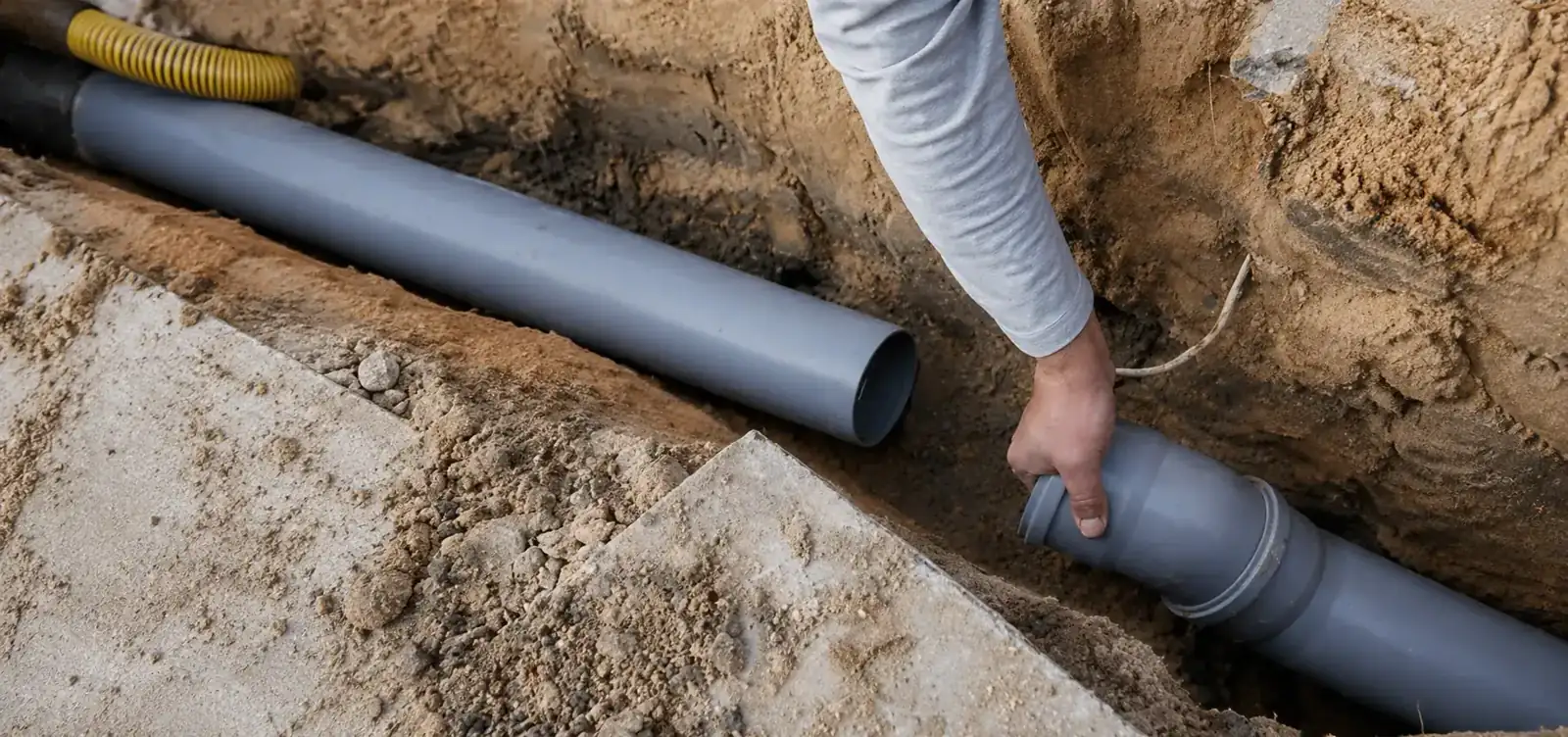
HDPE pipe installation in Dubai
HDPE is the tough one: flexible and fusion-welded, made for buried mains and lines that must take a beating.
Quick answer
What is HDPE pipe used for?
HDPE (high-density polyethylene) is a tough, flexible pipe used for water mains, buried lines and larger runs. It is fusion-welded into continuous lengths, and its strength is durability: it resists impact, ground movement and the stresses of being buried, which is why it is chosen for water mains and demanding underground applications rather than internal plumbing.
Toughness is the defining property
HDPE, high-density polyethylene, is the pipe you choose when durability under demanding conditions is the priority. It is both tough and flexible, an unusual and valuable combination, and it is joined by fusion welding into long continuous lengths, like PPR but at a scale and strength suited to bigger, more demanding jobs. Where the other materials are chosen for internal plumbing, HDPE's defining quality is that it withstands things internal pipes never face: impact, ground movement, the stresses of burial, and the demands of carrying water across distance and underground.
That toughness is why HDPE is the material for water mains, buried supply and drainage lines, larger-diameter runs, and applications where the pipe must survive being underground in shifting or difficult ground for the long term. Its flexibility means it can accommodate ground movement that would crack a rigid pipe, and its fusion-welded joints make continuous lengths with no separate seals to fail underground, where a joint failure is expensive to reach and repair. For demanding, buried, larger-scale work, those properties are exactly what is needed.
Where HDPE suits, and where it is overkill
HDPE is a specialist choice for demanding applications, and matching it to the right job matters. It suits water mains and larger supply lines, buried runs where toughness and ground-movement resistance are needed, and larger-scale or infrastructure drainage where its strength earns its place. It is not the everyday choice for internal hot-and-cold plumbing, where PPR or flexible PEX are more usual, nor for standard internal gravity drainage, where PVC is the norm. Choosing HDPE where its toughness is genuinely needed, rather than by default, is part of matching material to application honestly.
Installing HDPE properly
HDPE's fusion welding requires the right equipment and correct procedure, because the fused joints are the heart of its reliability, especially where the pipe will be buried and hard to reach. A joint welded correctly is as strong and continuous as the pipe; one welded poorly is a buried weak point. So a sound HDPE installation depends on proper fusion welding and on the pipe being correctly laid, bedded and supported for a buried or larger-scale run. Done properly, HDPE gives a tough, continuous, long-lasting system for exactly the demanding mains and buried applications its properties are made for.
Frequently asked questions
What is HDPE pipe used for?
HDPE (high-density polyethylene) is a tough, flexible, fusion-welded pipe used for water mains, buried lines and larger runs. Its strength is durability: it resists impact, ground movement and the stresses of burial, and its flexibility lets it accommodate ground movement that would crack rigid pipe. Fusion-welded into continuous lengths with no separate seals to fail underground, it suits demanding buried and larger-scale applications rather than internal plumbing, which is where its toughness genuinely earns its place.
When would I use HDPE instead of other pipes?
When toughness and burial resistance are the priority: water mains and larger supply lines, buried runs where ground movement and impact resistance matter, and larger-scale or infrastructure drainage. HDPE is a specialist choice for demanding applications, not the everyday material for internal hot-and-cold plumbing, where PPR or flexible PEX are usual, nor for standard internal gravity drainage, where PVC is the norm. Choosing HDPE where its toughness is genuinely needed, rather than by default, is matching material to application honestly.
What makes a good HDPE installation?
Correct fusion welding and proper laying, because the fused joints are the heart of HDPE's reliability, especially where the pipe is buried and hard to reach later. A joint welded correctly, with the right equipment and procedure, is as strong and continuous as the pipe; one welded poorly is a buried weak point that is expensive to reach if it fails. A sound installation depends on proper fusion plus the pipe being correctly bedded and supported for its buried or larger-scale run.
Is there a hdpe pipe installation service near me in Dubai?
In practical terms, near me means we can reach you. We provide hdpe pipe installation across Dubai, working from our base in Al Quoz Industrial Third, so a near me search is answered less by a branch on your street and more by how quickly we can reach you. That depends on where you are in the city, the time of day and access, so rather than claim to be the nearest, we ask where you are and give you a realistic time to attend. Tell us your location and what you need, and we will be straight about when we can be there.
Related pages
Contact
Tell us about the buried or mains work
A water main, a buried supply or drainage line, or a larger run. Tell us the job and we will scope the HDPE work.
Phone
+971 56 864 8994
Email
info@jetdrainpro.com
Need HDPE mains or buried line installed?
Tell us the job, a main, a buried run, or a larger line, and we will advise whether HDPE suits it and install it fused.