
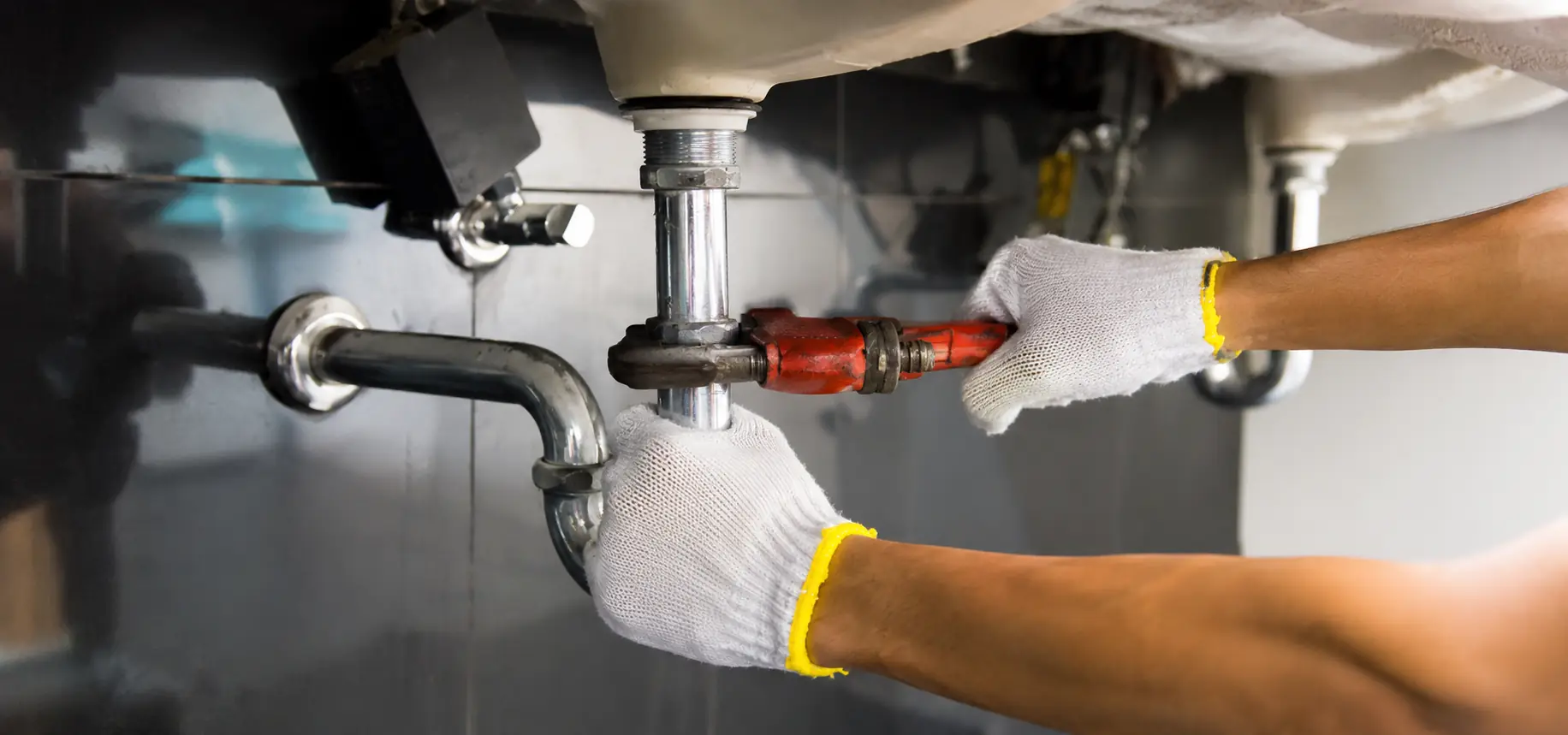
PPR pipe installation in Dubai
PPR is joined by heat, not glue. The joints fuse into the pipe, which is why a good PPR system resists leaks.
Quick answer
What is PPR pipe used for?
PPR (polypropylene random) pipe is used for hot and cold pressurised water supply. Its defining feature is that joints are made by heat fusion, melting pipe and fitting together, rather than glue or threads, so the joints become part of the pipe. This makes a PPR system continuous and highly leak-resistant, which is why it is widely used for building water supply.
Fused, not glued or threaded
PPR, polypropylene random, is a pipe for hot and cold pressurised water supply, and its defining characteristic is how it is joined. Where PVC drainage is solvent-welded and metal pipes are threaded or soldered, PPR is joined by heat fusion: the pipe and fitting are heated until the material melts, then pushed together, so they fuse into a single continuous piece as they cool. There is no glue, no thread, no separate sealant at the joint. The joint becomes part of the pipe.
This is the whole point of PPR and the reason it is so widely used for water supply in buildings here. A fused joint has no separate seal to fail, which makes a properly installed PPR system highly resistant to leaks at the joints, historically the weak point of any pipework. For pressurised water supply, where a joint leak means water escaping continuously under pressure, that leak resistance is exactly the property you want, which is why PPR has become a standard for hot and cold water distribution.
Where PPR suits, and where it does not
PPR is a water-supply material, not a drainage one, and matching material to application is the honest starting point. It is well suited to hot and cold pressurised water distribution in a building, carrying treated water to the fixtures, and it handles the temperature of hot water supply, which not every plastic does. It is not the material for gravity drainage, which is PVC's job, nor for the buried water mains and large lines where HDPE's toughness suits, nor is it as flexible for tight retrofits as PEX. The right pipe depends on the job, and for pressurised hot and cold supply within a building, PPR and its fused, leak-resistant joints are a strong choice.
Installing PPR properly
The strength of PPR is entirely in the quality of the fusion. A joint fused correctly, right temperature, right time, clean and square, becomes as strong as the pipe. A joint fused poorly, too little heat, contamination, misalignment, is a weak point that can fail. So a good PPR installation is about doing the fusion properly at every joint, and about supporting and routing the pipework correctly for a hot-and-cold system. Done right, PPR gives a continuous, leak-resistant water supply system; the material's advantages are only realised if the fusion is done to standard.
Frequently asked questions
What is PPR pipe and why is it used for water supply?
PPR (polypropylene random) is a pipe for hot and cold pressurised water supply, defined by how it is joined: by heat fusion, melting pipe and fitting together so they become one continuous piece, rather than glue, thread or a separate seal. This makes a properly installed PPR system highly resistant to leaks at the joints, which are historically the weak point of pipework. For pressurised supply, where a joint leak means continuous escaping water, that leak resistance is why PPR is a standard for building water distribution.
Is PPR pipe used for drainage?
No, PPR is a pressurised water-supply material, not a drainage one. Drainage flows by gravity and uses PVC, which is rigid and holds its fall. PPR carries treated hot and cold water pushed through under pressure to the fixtures, and it handles hot-water temperatures. Matching material to application matters: PPR for pressurised supply, PVC for gravity drainage, HDPE for buried mains and large lines, PEX where flexibility suits. Using the right pipe for the job is the honest starting point of any installation.
What makes a good PPR installation?
The quality of the heat fusion at every joint. A joint fused correctly, at the right temperature and time, clean and square, becomes as strong as the pipe itself; one fused poorly, with too little heat, contamination or misalignment, is a weak point that can fail. So a good PPR installation comes down to doing the fusion properly at every joint, plus supporting and routing the hot-and-cold pipework correctly. The material's leak-resistance advantages are only realised when the fusion is done to standard.
Where can I find ppr pipe installation near me?
The honest version of near me is about response time, not distance on a map. We provide ppr pipe installation across Dubai, working from our base in Al Quoz Industrial Third, so a near me search is answered less by a branch on your street and more by how quickly we can reach you. That depends on where you are in the city, the time of day and access, so rather than claim to be the nearest, we ask where you are and give you a realistic time to attend. Tell us your location and what you need, and we will be straight about when we can be there.
Related pages
Contact
Tell us about the supply work
New water supply, a replacement, or a specific run. Tell us the job and we will scope it and confirm the right material.
Phone
+971 56 864 8994
Email
info@jetdrainpro.com
Need PPR water supply installed?
Tell us the job and we will advise whether PPR suits it, and install it with proper heat-fused joints.