
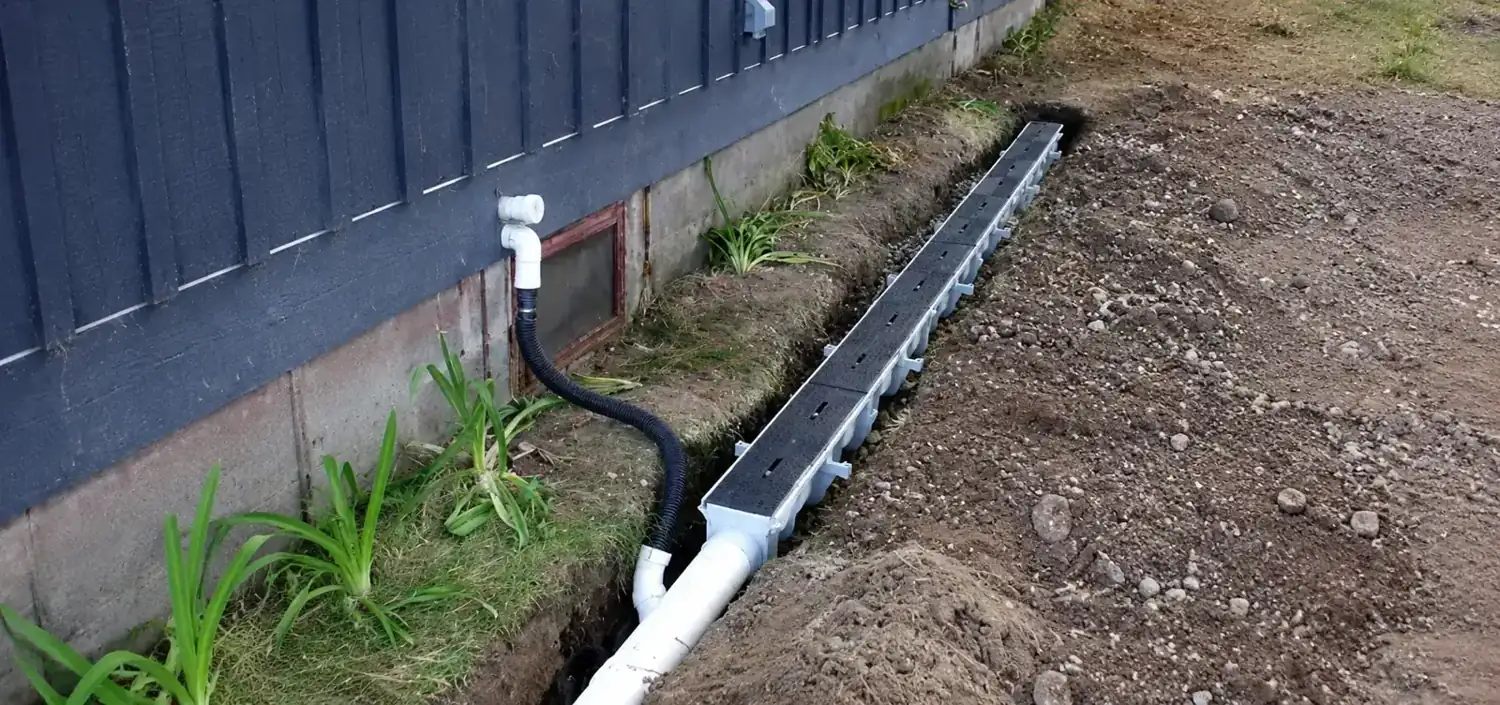
Commercial drain installation
Higher loads, grease from day one, and a system many people depend on. The stakes of getting it right.
Quick answer
What does commercial drain installation involve?
Commercial drain installation handles higher loads and volumes than residential: larger pipes, grease management for kitchens, shared systems serving many occupants, and usually permits for connection to the public network. The fundamentals are the same, correct fall, sound jointing, testing before covering, but the scale and the compliance requirements are greater.
What raises the stakes on a commercial installation
Commercial drainage follows the same rules as any installation, but four things make it more demanding. The loads are higher, so the pipes are larger and the fall and capacity must be right for real volume. The systems are shared, serving many tenants or a whole building, so a fault affects everyone downstream. Kitchens introduce grease from the first day of trading, which the design has to anticipate with grease traps and adequate line sizing. And commercial connections to the public network usually require permits and approval, which shape both the timeline and the design.
The consequence of getting it wrong is also greater. A residential drainage fault inconveniences a household; a commercial one can close a restaurant, flood a retail unit, or surface in a public area. So while the engineering is the same, the margin for error is smaller, and the value of designing the system properly before laying it is higher.
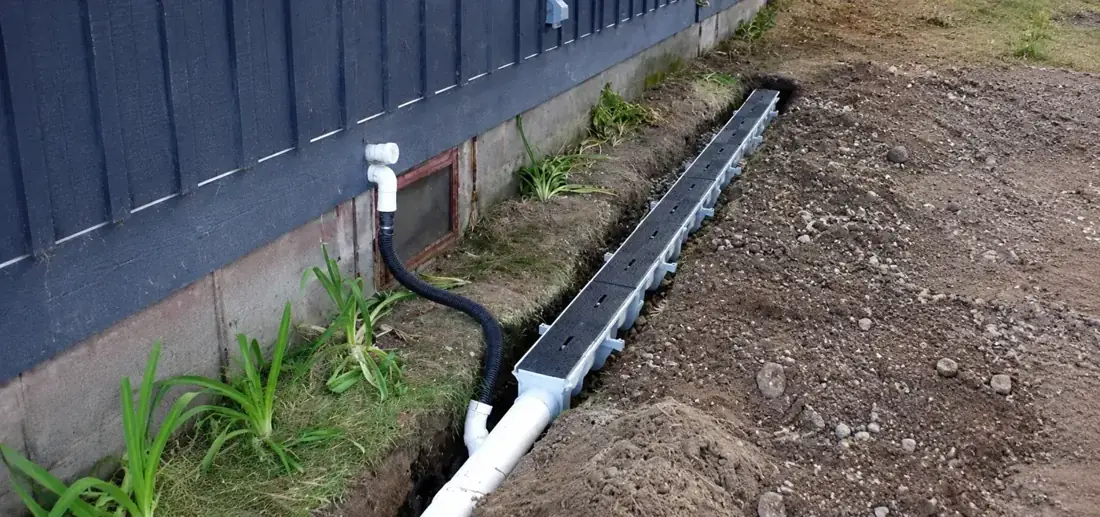
What a commercial installation must get right
- Capacity and fall for the real load, not a domestic estimate. A commercial kitchen or a busy retail centre puts through far more than a home.
- Grease management designed in from the start, with correctly sized traps and lines that anticipate grease, since retrofitting it later is far harder.
- Access designed for maintenance, because a commercial system will be maintained on a schedule and needs chambers and rodding points that make that practical.
- Compliance with the requirements for connection and discharge, confirmed with the responsible authority before work proceeds.
- Testing before covering, as on any installation, with records kept, because a commercial building's drainage documentation has ongoing value.
Design it for the maintenance it will need
The feature that most distinguishes good commercial drainage installation from adequate residential installation is designing for the maintenance to come. A commercial system will be cleaned, jetted and surveyed throughout its life, far more often than a home's, so the installation should make that easy: accessible chambers, well-placed rodding points, grease traps sized and sited for regular servicing. A system laid without thought for how it will be maintained is one that costs more to maintain forever, in access problems and awkward servicing. The cheapest commercial drainage over its life is the one designed, at installation, for the maintenance it will need. See commercial drain installation cost factors.
Frequently asked questions
How is commercial drain installation different from residential?
Chiefly in scale and compliance. Commercial systems carry higher loads and volumes, so pipes are larger and capacity matters more; they are shared, so faults affect many occupants; they usually involve grease from kitchens, which must be designed for from the start; and they generally require permits for connection to the public network. The engineering fundamentals, correct fall, sound jointing, testing before covering, are the same, but the stakes and the regulatory requirements are greater.
Does a commercial kitchen need special drainage installation?
Yes. A commercial kitchen produces grease from its first day, so its drainage must be designed with correctly sized grease traps and lines that anticipate grease loading, rather than retrofitting these later, which is far harder. The line sizing, trap capacity and access for servicing should all be planned around the kitchen's expected output. Grease management designed in at installation is much cheaper over the life of the premises than dealing with it reactively.
Do I need permits for commercial drain installation in Dubai?
Commercial connections to the public drainage network generally require approval and coordination with the responsible authority, and the requirements differ between Dubai Municipality areas and free zone developments. Because permits affect both the design and the timeline, they should be established at the design stage so they run alongside the work. A drainage specialist familiar with the local requirements can identify which apply to your premises before work begins.
Why design commercial drainage for maintenance?
Because a commercial system will be maintained throughout its life, far more often than a home's, so making that maintenance practical saves money for as long as the building stands. Accessible chambers, well-placed rodding points, and grease traps sized and sited for regular servicing all make routine cleaning and inspection easier and cheaper. A system laid without thought for maintenance costs more to service forever, which is why designing for it at installation is the economical choice.
How do I find commercial drain installation near me in Dubai?
We work across Dubai, so near me is less about a branch nearby and more about coverage. We provide commercial drain installation across Dubai, working from our base in Al Quoz Industrial Third, so a near me search is answered less by a branch on your street and more by how quickly we can reach you. That depends on where you are in the city, the time of day and access, so rather than claim to be the nearest, we ask where you are and give you a realistic time to attend. Tell us your location and what you need, and we will be straight about when we can be there.
Related pages
Contact
Ask about commercial drainage
A fit-out, a new build, or a system to extend or replace. Tell us the premises and its use.
Phone
+971 56 864 8994
Email
info@jetdrainpro.com
Planning commercial drainage?
Tell us the premises and what it must handle. Commercial drainage is worth designing properly before anything is laid.