
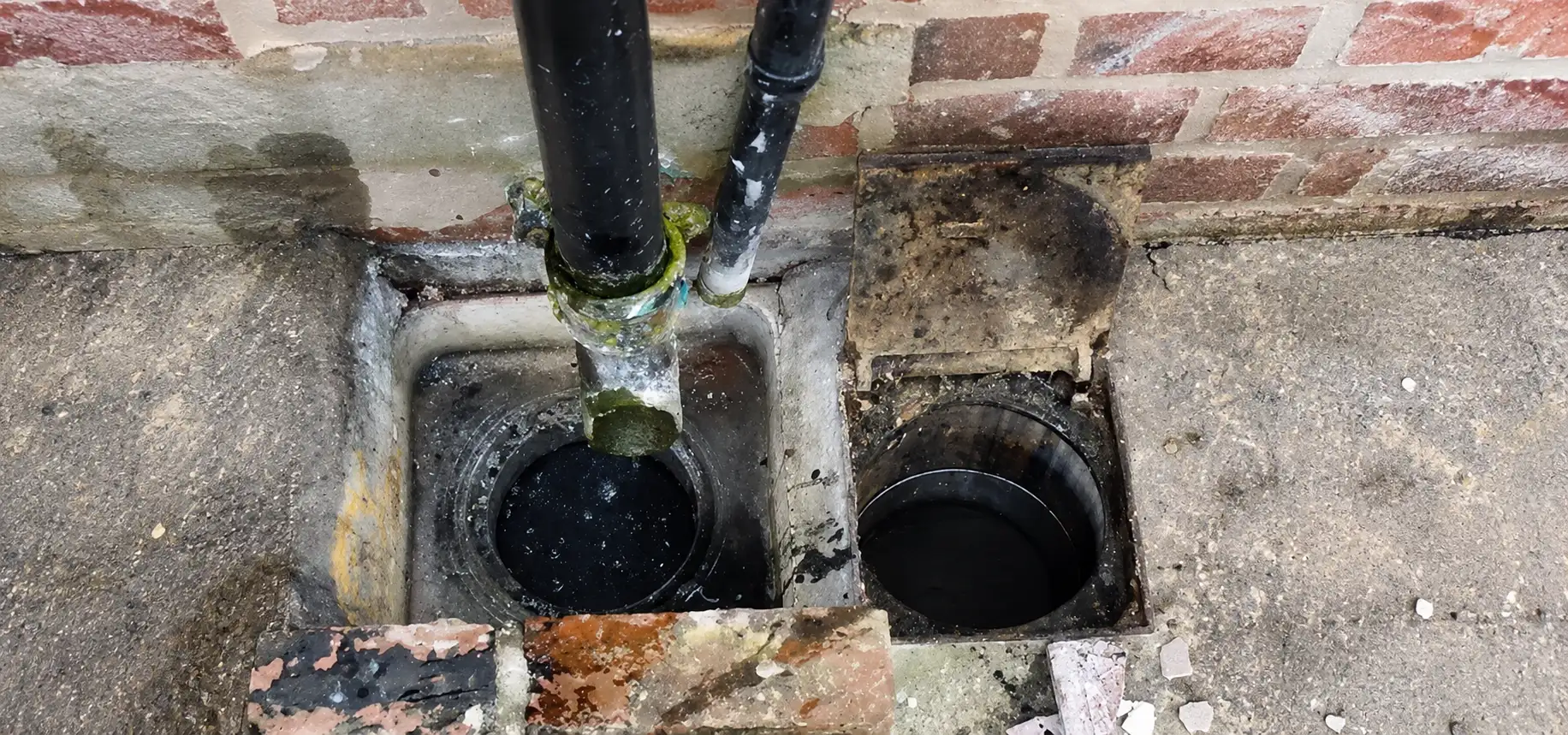
Restaurant drain cleaning in Dubai
In a restaurant, drainage is a grease problem, and grease is a scheduling problem.
Quick answer
Why do restaurant drains block so often?
Restaurant drains block because of grease. Kitchen fats leave the sink warm and liquid, then cool and harden on the pipe wall until the line closes. Volume makes it worse: a restaurant produces in a week what a home does in a year. The answer is grease trap servicing and scheduled jetting, not repeated emergency clearing.
Grease is the whole story
Almost every restaurant drainage problem comes back to fats, oils and grease. They leave the kitchen liquid and warm, travel a little way, cool, and solidify against the pipe wall. Every service adds a layer. Left alone, the line narrows until it closes, and it closes at the worst time, during service, because that is when the load is highest. A restaurant that deals with drainage only when it blocks is guaranteeing the blockage happens mid-service.
The volume is what separates a restaurant from a home. A busy kitchen puts through in a week what a family does in a year, so grease that would take years to matter in a house matters in weeks here. That is why restaurant drainage is not a clearing problem to solve once. It is a grease-management problem to stay ahead of.
The grease trap is the control point
A grease trap, or interceptor, sits between the kitchen and the sewer and holds grease back before it reaches a pipe nobody can easily clean. It is both the practical control on your drainage and a compliance requirement for food premises in Dubai. A trap that is serviced on the right schedule protects the line downstream; a trap left until it is full simply passes grease straight through, and the line fouls on the trap's timetable regardless of how often you clean it.
So restaurant drainage has two halves that must move together: servicing the trap often enough that it keeps holding grease, and jetting the lines to remove what gets past it. Do one without the other and the problem persists. This is also where the compliance and the practical overlap, because the records of trap servicing are what an inspection checks, and a trap serviced on a sensible schedule is usually a trap kept compliant.
Scheduled, because the alternative closes covers
The case for scheduled maintenance in a restaurant is simple arithmetic. A planned visit on a closed morning, at a booked rate, costs a fraction of an emergency callout during service, and the emergency callout comes with turned-away covers and, at worst, a closure while the mess is cleared. The blockage was building for weeks; the cost lands in one evening. Planned maintenance moves the same work to a time that does not cost you a service.
The right interval comes from your kitchen, not a contract template. A heavy-frying kitchen with a long horizontal run fills a trap and fouls a line far faster than a light one. We survey once, set a conservative first interval, and adjust it from what the first services find, so you pay for the maintenance the kitchen actually needs and no more.
Frequently asked questions
How often should a restaurant clean its drains?
The interval should be set by the kitchen's grease output and the length and fall of its lines, established from an initial survey and the first few services rather than a generic figure. A busy frying kitchen may need attention every few weeks; a lighter operation less often. Grease trap servicing frequency is partly set by compliance requirements and partly by how fast the trap fills, and the two usually point to a similar schedule.
Why does my restaurant drain keep blocking even after cleaning?
Usually because the grease trap is not being serviced often enough, or the line is being cabled rather than jetted. If the trap is full it passes grease straight to the line, which then fouls again on the trap's timetable no matter how often you clear it. And a cable bores through a grease blockage while leaving the coating on the wall, so the line re-blocks. The fix is servicing the trap on schedule and jetting the lines to remove the coating.
Is a grease trap mandatory for a restaurant in Dubai?
Food premises that discharge fats, oils and grease are required to fit and maintain a grease interceptor, and to keep records of its servicing, so that grease is captured before it reaches the public sewer. The detail is set by the municipal authority and the premises licence and is revised periodically, so the current requirement should be confirmed with the authority. We can service the trap and produce the records an inspection needs.
Can drainage problems close my restaurant?
A serious blockage or a failed inspection can, yes. A line that blocks during service can force covers to be turned away or, at worst, a temporary closure while it is cleared, and a grease trap that is not maintained can fail a compliance inspection. Both are largely preventable with scheduled maintenance and trap servicing, which is why the case for planned drainage in a restaurant is ultimately about protecting trading, not just the pipes.
How do I find restaurant drain cleaning near me in Dubai?
We work across Dubai, so near me is less about a branch nearby and more about coverage. We provide restaurant drain cleaning across Dubai, working from our base in Al Quoz Industrial Third, so a near me search is answered less by a branch on your street and more by how quickly we can reach you. That depends on where you are in the city, the time of day and access, so rather than claim to be the nearest, we ask where you are and give you a realistic time to attend. Tell us your location and what you need, and we will be straight about when we can be there.
Related pages
Contact
Ask about restaurant drainage
A slow kitchen line, a trap needing service, a compliance check coming, or a schedule to set up. Tell us the premises.
Phone
+971 56 864 8994
Email
info@jetdrainpro.com
Set up a maintenance schedule
Tell us the kitchen and its load. We will survey once and propose a schedule built on your grease output, not a template.